Review: Détresse – Misères

Share
Review by Rick Eaglestone
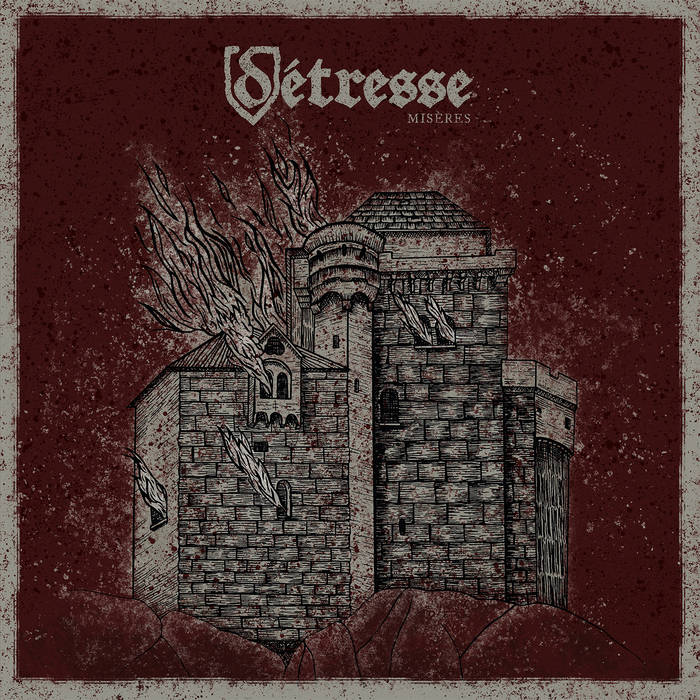
Détresse – Misères
Record Label: Vendetta Records
Year: 2026
Rating: 8/10
Despair has never needed a passport, and Détresse are living proof. Split between Austria and Québec, the trio arrived through Vendetta Records in 2025 with Pessimismes, a debut that favoured exposed nerve over polish and carried them a long way in a short time: a slot at Julfest in Austria, a fortnight on European roads with Miserere Luminis this spring, and a December run alongside Darvaza, Merrimack and Helleruin that takes in Eindhoven Metal Meeting along the way. Seventeen months on, Misères lands through the same label, and the plurals in both titles are telling. This is a band that deals in conditions rather than moments, and its second full-length widens the lens from private gloom to something nearer a social history of suffering.
On paper, Détresse keep themselves at arm’s length, credited only by initials. S.P. handles guitars and lead vocals, and is Patrick Stoiber, whose CV runs through Einst and Angest, with Lebenssucht and Svarta in the rear-view mirror. Bassist C.S. shares Angest with him and plays live for Gevurah, while drummer L.S. also serves in Anomalie. Stoiber also arranged and mixed the album, with Christian Höll on mastering duties and Noircevr responsible for the cover art, and there are two outside hands worth noting: Merrimack’s Vestal contributes guest vocals and lyrics to Les Nuits Jaunes, and Azrael Trailovic is credited with the instruments on the closing Verloren. That is a lot of keeping it in the family, and the record sounds like the work of people who share a single, uncompromising idea of what this music is for.
That idea is laid out plainly. Misères is about human hardship in its broadest sense: the want, subjugation and hopelessness that settle into ordinary lives and repeat across generations until it is hard to tell which century the misery belongs to. It is delivered in seven tracks whose titles move between French, German, and English, which suits a band whose members do not share a homeland and makes its own quiet point: suffering is fluent in every tongue. Musically, Détresse sits in the raw, bleak wing of European Black Metal, closer to the scorched-earth end of the spectrum than to anything symphonic or ornate, and the production keeps the edges sharp rather than sanding them into something comfortable.
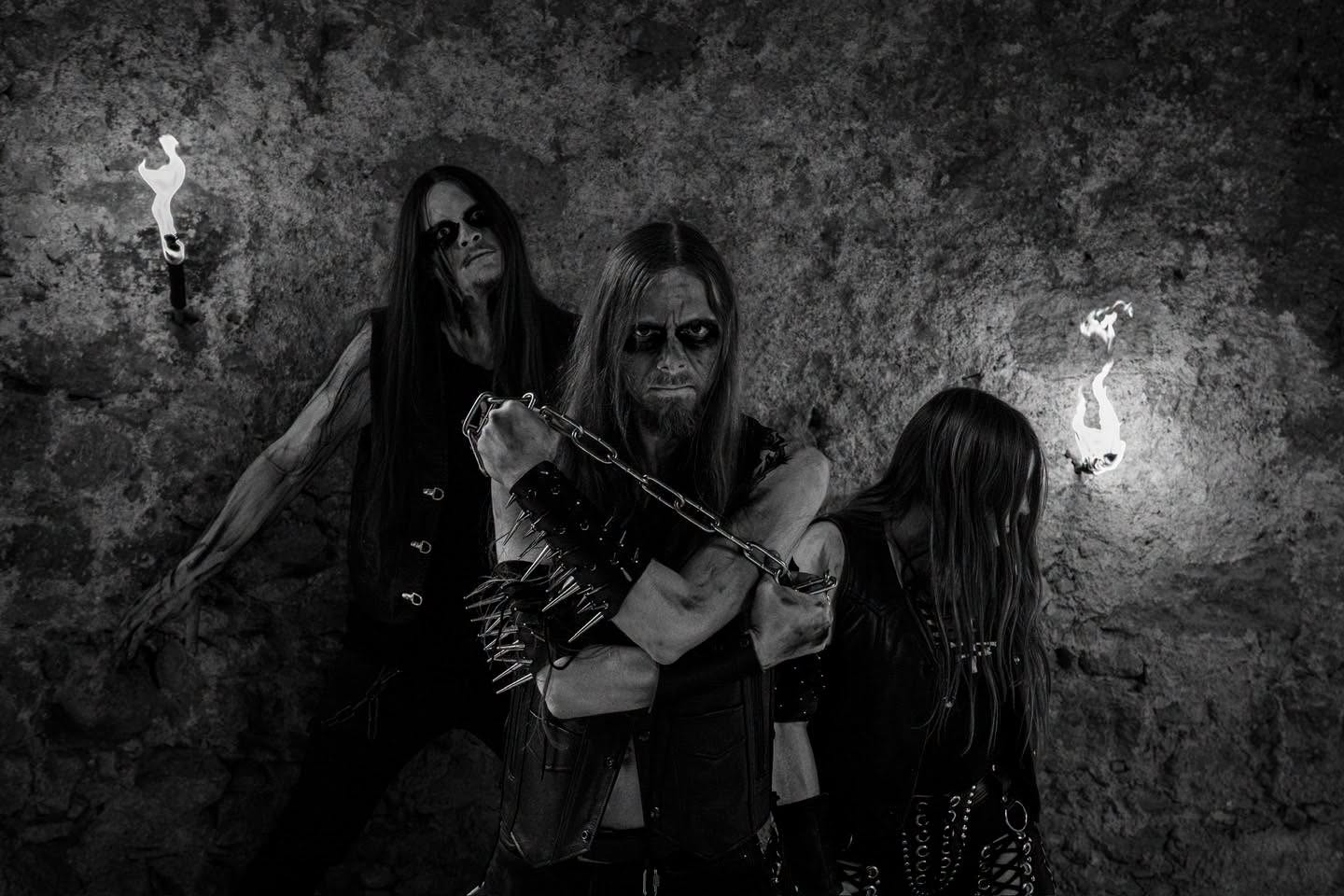
Détresse
Vallée de Misères opens the record by doing exactly what its title promises, mapping out the terrain before anyone is asked to walk it. As a statement of intent, it is direct, the band wasting no time on preamble and pitching the listener straight into the valley, and it establishes the tone that will hold for most of the running time: cold, unhurried in its cruelty, and in no mood to offer comfort.
Verrottet, the lead single, is German for rotten, and the band has been blunt about its meaning: a picture of mankind eaten away from within, with, in their words, “no hope of redemption; its only fate is an inevitable, self-inflicted demise.” It is the record’s thesis in miniature. Where so much Black Metal points its misanthropy outward at some convenient enemy, this turns the knife inward, and Stoiber’s vocals sell the verdict with a conviction that never tips into theatre. It was the right choice to introduce the album because nothing else here explains the project quite as succinctly.
Schwefel, sulphur, keeps the German thread running and brings with it the stench of brimstone the title implies. If Verrottet is the diagnosis, this feels like the symptoms setting in, and it is here that the rhythm section proves its worth, C.S. and L.S. holding a hard, steady line beneath the guitar so that the song pushes forward relentlessly rather than collapsing in on itself.
Les Nuits Jaunes is where Misères reaches its most extreme, and the band themselves call it their harshest track to date. Bringing in a guest voice halfway through your own album is a bold move, but it pays off handsomely. Vestal brings a different kind of venom, C.S. adds spoken passages that give the track an unsettling human texture, and the drumming is at its most ferocious, with lead guitar lines cutting through the murk above it. The band speaks of dragging the listener into misery’s darkest corners, and this is the bottom of the valley.
Peine Perdue returns to French and to an idiom that translates as wasted effort, or a lost cause, which is about as neat a summary of the album’s worldview as you could ask for. Coming straight after the onslaught of Les Nuits Jaunes, it allows the record a little more room to breathe without ever loosening its grip, and the sense of futility in the title seeps into the music, a slow realisation that whatever struggle is being described is not going to be won.
So Bitter, So Kalt might be the cleverest title on the album, English and German folded into a single phrase in a way that mirrors the band’s own make-up. It is bitter, it is cold, and it is the final full-blooded Black Metal piece on the record, gathering up the themes of what has come before and delivering them one last time with weight and resolve before the curtain falls.
That curtain is Verloren, lost, and it is a purely acoustic closer. After everything that precedes it, the sudden absence of distortion is striking, and with Azrael Trailovic at the helm it plays less like a coda than an aftermath, the sound of someone surveying what is left once the storm has passed. It is a brave way to finish an album this abrasive, and a wise one: rather than one final assault, Détresse leave the listener alone with the silence, which in context is far more unsettling.
What Misères demonstrates above all is a band refusing the easy second-album route of simply doing Pessimismes again, only louder. The scope has broadened from the personal to the collective, the multilingual approach gives the record a character of its own, and the guest spots are woven into the fabric rather than bolted on for the sticker. It is not without its demands. This is unrelenting, deliberately joyless music, and those who need a melodic lifeline or a moment of uplift will find almost none on offer until the acoustic close, by which point the damage has been done. But that is the point of an album about misery, and Détresse commit to it with total seriousness. Bleak, bitter and very cold indeed, it is a second album that makes the case for this transatlantic trio as one to watch closely, and one well worth catching on that December tour.
You Might also Like