News: Black Temple presents: Vígljós (CH) – LIVE at Black Temple

Share
Black Temple presents
Vígljós (CH) – LIVE at Black Temple
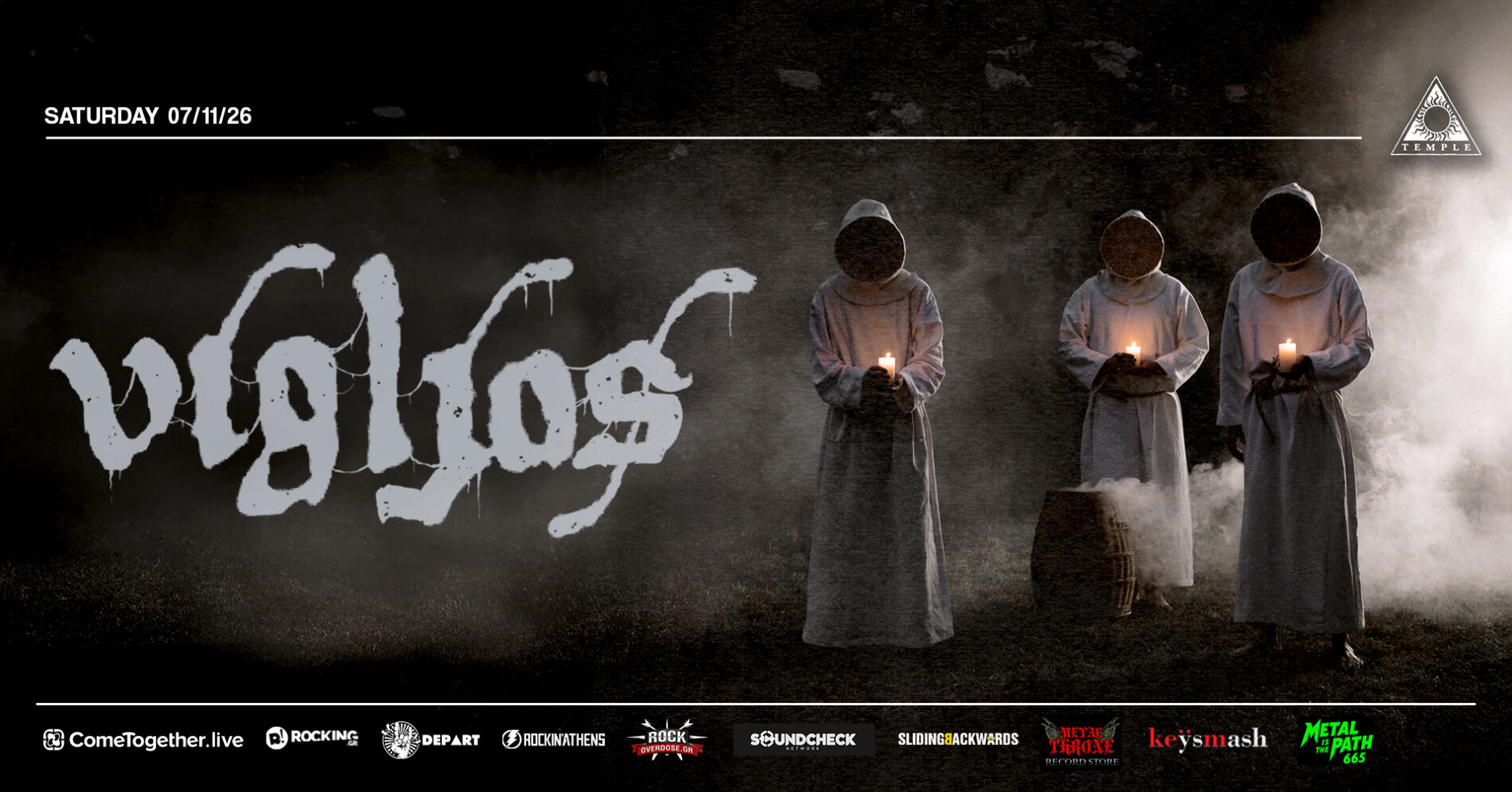
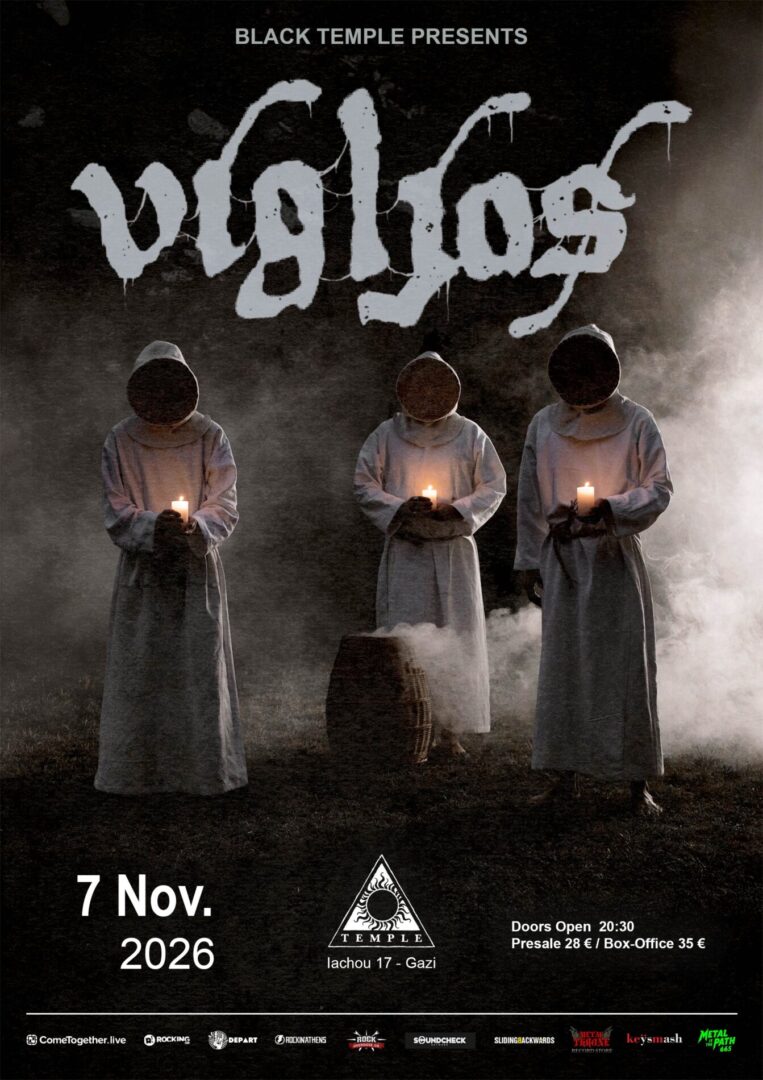
On Saturday, November 7, 2026, the beekeepers Vígljós arrive in Greece for the first time to present their unique, obscure, old-school “Beehive Black Metal” on the stage of Black Temple!!!
The call of the swarm has begun…
(support act t.b.a)
Saturday, November 7, 2026
BlackTemple – 17 Iakchou St., Gazi
Doors open: 20:30
Tickets: Presale: €28 | At the door: €35 | Online presale via the Cometogether network
Presale direct link:
https://cometogether.live/event/6238/vigljos-ch-live-at-black-temple-first-time-in-greece
Fb event
Physical presale points:
– Metal Throne Record Store
5 Lykourgou Logotheti St., Egaleo
Tel. 2160000060
– Metal Era 22
Emmanouil Benaki St., Athens
Tel. 2103304133
– Hive Records
6 Ithakis St., Kypseli
Tel. 2110084874
Media inquiries: info@thetemple.gr
Vígljós
Vígljós (Old Norse for “light just sufficient to kill a man”) was formed in Basel in 2022. As of the summer of 2025, the band consists of four members from Germany and Switzerland, featuring guitar, drums, mellotron, and vocals.
They recently completed the recording of their second studio album, titled “Tome II: ignis sacer,” at Marc Obrist’s (Zeal & Ardor) Hutch Sounds in Oberwil (BL), with its release scheduled for September 2025.
Vígljós draws strong influences from the pioneers of the second wave of Norwegian Black Metal, such as Darkthrone, Immortal, and Burzum.
Guided by these dark stars of Black Metal, they weave together the sound of 90s black metal with touches of synth, tremolo-picked guitars, subtle rock ‘n’ roll riffs and rhythms—all layered with atmospheric textures of the mellotron.
At their live performances, the audience should prepare for an experience that stimulates the senses of hearing, sight, and smell—an experience that is hard to forget.
Their new album, “Tome II: ignis sacer,” is primarily inspired by the phenomenon of ergotism—that is, intentional or accidental poisoning resulting from the consumption of the fungus *Claviceps*, which grows on grains, particularly rye and wheat. This is the very same fungus from which LSD was synthesized in the 1960s.
However, humanity’s relationship with *Claviceps* is much older, reaching back to the Middle Ages—and perhaps even further. It is believed that various early artists with a visionary or psychedelic style, such as Hieronymus Bosch, may have intentionally poisoned themselves with these fungi.
Furthermore, several historical periods marked by social unrest, witch hunts, and widespread societal collapse are linked to eras when climatic conditions favored the growth of *Claviceps* on cereals, which served as a primary food source.
Simply put, people experienced intense hallucinations, while their bodies simultaneously collapsed and rotted away due to the poisoning. During the Middle Ages, this illness was known as “Saint Anthony’s Fire” or “Ignis Sacer.”
(Booking agency: Swamp Booking)
You Might also Like