Interview: Martröð

Share
Interview by Jeger
Dreams – a portal into the unknown? Conduit for spiritual awareness and communication? Just your brain processing information? I’ll say that all three should be considered when discussing dreams and their implications on reality. For some individuals, dreams are rarely remembered, while for others, they’re a haunting experience that lingers throughout their day. And if you’re an Artist, dreams serve as an oasis of inspiration. Martröð is a duo whose aspirations happen to fall in line with their experiences with the dreamscape. What is truth and what is deceitful; hidden knowledge to attain and explore through traversing the realm of visions.
Isolation, patience and wisdom – three character elements that for some are vital to recording Black Metal. After all, is it not deserving of such exacting standards? For Martröð, entire tracks, entire albums’ worth of material scrapped! For the integrity of the art. Such is the mindset of one who is truly experienced; who is truly a master.
The doomsday clock is ticking! Apocalyptic visions befall Martröð and they are documented in their works, in albums like their debut LP, “Draumsýnir Eldsins”. During my latest interview, HV and AP of Martröð go into detail about their values/vision as a band, what inspires them, their dreams and their implications on their art and the arduous nature of the albums’ recording process.
This Is Black Metal: Hails! And welcome to This is Black Metal. There’s a proper level of mystique to Martröð that I feel is missing from too many bands out there. There’s not a lot to be known about you at this point if you’re someone who doesn’t have the promo. Can you give us an idea as to the band’s vision and values?
HV: Living on a culturally deprived island has taught me to truly listen and also to work in solitude. For me, Martröð is a vessel where I personally can put ideas, sounds, and atmospheres that could not belong anywhere else. There is a strong focus on the idea of the hidden truths of reality, on what is revealed slowly, through visions or dreams. In my view, we value the art of the process as much as the result. There is a lot more thought and effort involved in Martröð than any other project I have been involved in before. The idea is to put forth work that is dense enough to reward many listens.
AP: There is an abundance of moving pieces, ideas and experimentation behind the scenes that cause us to look more inward versus ‘public facing’ with Martröð. Any mystique is a result of our preference to be locked away; toiling like madmen; trying to craft things that reflect the visions we chase. Hidden truths are probably a solid description for it.
Martröð
TIBM: I was reading where it appears that some of your work pertains to dreams or visions. Usually, when an Artist takes on the task of creating music that is so specific to one theme, it’s because of some kind of personal experience. Was there anything specific that inspired you to write such a specific dream/vision-themed album in your debut LP, “Draumsýnir Eldsins”?
HV: Writing lyrics and framing the music within the realm of dreams allows us to draw down supranatural ideas into reality. For me, the dream theme is very natural. My own dreams are usually very intense and apocalyptic experiences that feel like they were directed by Tarkovsky. However, on this particular release, I transferred that unto the idea of the noosphere – a collective consciousness of humanity that is theorized to be our next stage of evolution. That visions like these were shared by all and through that exploring the power of pre-determination and sheer will as it exists in magick. True will.
TIBM: How would you describe the writing/recording process?
AP: There wasn’t really any direct ‘thing’ that drove the creative process, rather allowing the subconscious to drive the vehicle and express intent that may get muddied by planning. Not to say this was improvised, far from it, but letting the automatic writing establish some sort of foundation that could be built upon. I did not want to approach this from the standpoint of consciously making references to influences while writing, e.g., “let’s put a little Funeral Mist here”, but allowing those influences to travel through the filters of our minds organically. It, however, took a considerable amount of time with this approach. Tons of demos and throwing things away permanently or to other projects where those sounds would be more appropriate. When we found something that fit our vision for the album, we would shape and mold it until we hit an endpoint through back-and-forth collaboration.
HV: Slow and methodical to the point of pain. I add atmospheres, noises, samples and sounds that are not always musical in the traditional sense. I like to fill the spaces between what is written; in the attempt to make a larger conjoined landscape for the music. This is all done through messages, sharing files, thoughts and small audio clips. There is a lot of discussion. This allows music to breathe in its own time, so we can revisit and revise as much as is needed. We also throw away many ideas, even entire albums, until we feel it is true to the vision. We have developed inhuman levels of patience through this method.
TIBM: It took ten years for you to get your debut LP released. Was that due to personal preference or were there outside influences that forced a delay?
HV: Yes, ten years is a long time, but we felt we needed to define what Martröð actually was. It needed to be its own defined entity. This meant that a lot of trial and error which in turn turned into years and subsequently ideas grew and changed. We evolved as musicians through the process, which meant that earlier attempts were relocated elsewhere. This was a once-in-a-lifetime luxury; being able to intellectually travel down all these different paths, and I don’t envision us having another ten years to spend for the next release, but at least now we have a roadmap for the way forward.
AP: Yes, we had the equivalent to a spiritual retreat for the project to find itself. The debut EP was, in simplistic terms, an accident of colliding different loose ideas together and finalizing it with a full band. I did not think this was a sustainable model going forward, and time was needed to figure out the next steps. Not to say that we were focused on this for ten years straight. Periodic rites of silence were needed to strip the brain of any self-imposed expectations or sense of obligation that fucks with a sincere creative process.
TIBM: I was also reading where your music has been described as “not performance, but invocation.” What’s your relationship with the Occult and has the Occult helped to shape your creative vision?
AP: I don’t follow any specific spiritual tradition or framework. I’ve studied certain topics on my own, and I’ve also been exposed to others through people close to me: both practicing adherents and self-styled academics. Some of what I’ve learned from all of this has stayed with me, and I’ve kept it private; using it quietly in my own work and in my understanding of myself. I drew on some of the methodologies used by folks that inspire me, for example: Austin Osman Spare, but there would be no direct references to Zos Kia Cultus to be found in Martröð. I find it more interesting to see how he created and how or if it could be a practical solution for my own creative pursuits.
HV: Revelations through dreams, primordial elements like fire, explorations on how true will shapes reality. The idea of destruction as art. These are not only ideas but interconnected forces that move with the music. They shape it to a large degree as well. There are lyrical themes that directly impact the music at times. Dreams are a powerful connection to the unknown and that is one facet of what we are exploring. The universe is constantly transmitting encrypted information to us as we sleep. These are hidden spiritual truths. In turn, the more you devote thought and will to them the more powerful you become in taming your subconscious.
TIBM: Much of the material feels very ritualistic, particularly during the final minutes of the opening track. Does ritual tie into the music at all?
HV: Yes, ritual is there in music. Not in the repetitive sense, but more in the idea of the flow: the journey, the slow building and the noises. They become a sacred space.
TIBM: “Draumsýnir Eldsins” is an apocalyptic visioning where the end is wrought through dreams, and with what feels like WW3 lurking over the horizon, it feels like a fitting record for our times. Thoughts?
HV: As I answer this, they have moved the doomsday clock yet again closer to midnight. I agree that it is quite fitting since it literally explores the end of reality through humanity’s tainted collective minds. At times, I actually feel like there is an internal self-destructive drive within us that is in battle with our goals to ascend to the next level. That is possibly the universal truth of cognizant life and the answer to the meaning to our existence; we might exist as brief windows into reality for a Demiurge to experience itself and then close that window through our own self-destruction.
AP: “So much is at stake and so much depends on the psychological constitution of modern man. . . Is he conscious of the path he is treading and what the conclusions are that must be drawn from the present world situation and his own psychic situation? . . . Does he realize what lies in store should this catastrophe ever befall him? Is he even capable of realizing that this would in fact be a catastrophe? And finally, does the individual know that he is the makeweight that tips the scales?”
~Carl Jung – The Undiscovered Self.
TIBM: I feel like a live Martröð performance would be a transcendent experience indeed. Does Martröð play live? If so, how would you describe the experience? If not, why?
HV: With our current output I don´t see how it would transfer over to a live speakers at a venue. There are too many layers, so many small details. It is better in headphones, better to listen to and enter the music. It is already in the best form to experience it. Maybe in the future something could be done if it fits what is being put forth at the time, but what we have now is for recorded form only. There also wouldn´t be any concerted effort to make music just to be able to play live.
AP: It would work if we had an orchestra of people to organically recreate the massive array of instruments on the album. Otherwise, we’d be half playing the songs, other half would be backing tracks. I understand the social experience of playing live and it might be something in the future, but as of now, I would recommend listening in a dark room, loudly, with decent quality speakers.
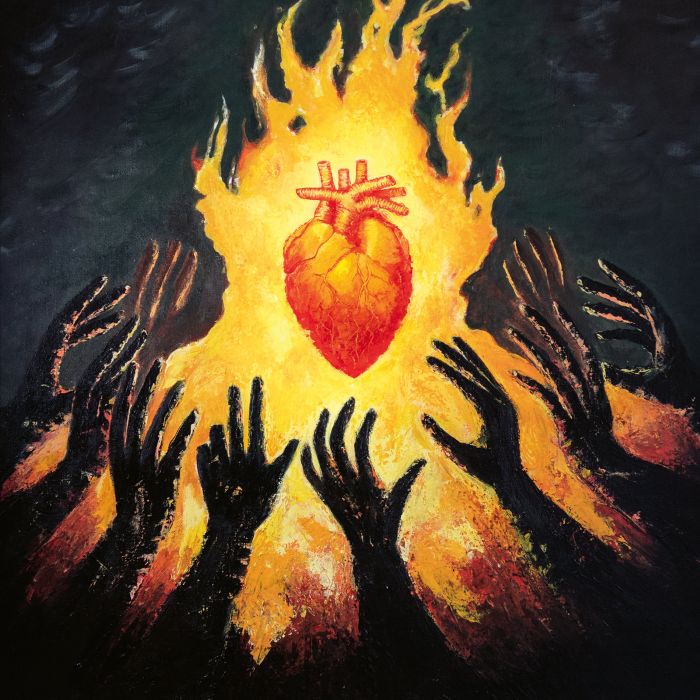
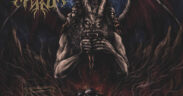
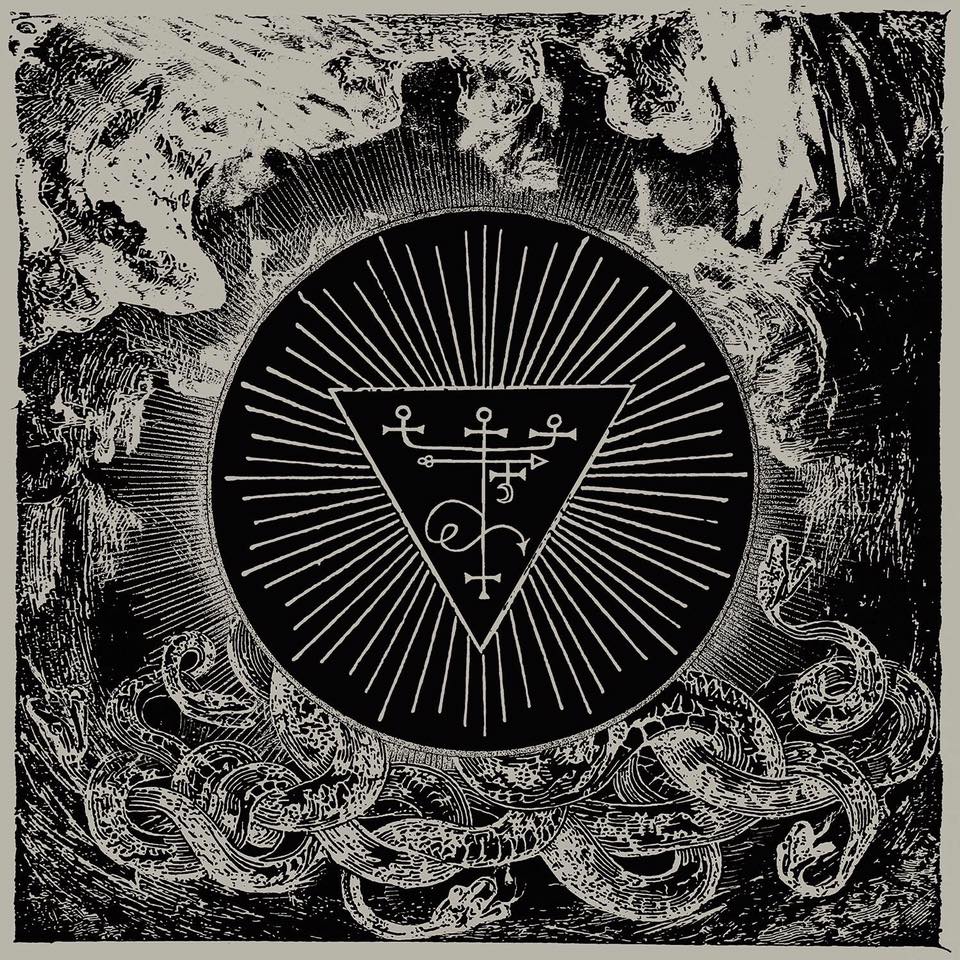
Martröð – Draumsýnir eldsins
TIBM: In my opinion, too many Black Metal bands are trying to recreate the early ‘90’s with their sound, as opposed to taking a more forward-thinking approach to their craft. Martröð is certainly an exception. Do you think that there is much value to these “old school” BM records or should evolution stand paramount?
AP: Both approaches can and should exist. There can be evolution inside the framework of the old, e.g. Darkthrone to Katharsis. With this example, there is a heavy reliance on what classic era Darkthrone established but successfully made its own without tearing from its core. If you have a project that remains 1:1 cloning of a band or sound, then so be it. I’m sure value can be found by someone. To pull it back a bit from Black Metal, artistic freedom and expression should exist as such to an individual, without thinking too much about what should or shouldn’t be. I’m also firmly rooted in the ‘90’s and early 2000’s, since those were my peak discovery years for Black Metal. Because of that, I have a few projects that lean into “old school” worship. Writing in that style requires a completely different approach than my more forward-thinking work. It forces different constraints, puts me in a different creative headspace and ultimately helps me grow and mature as a songwriter.
HV: I like the old records. They are a strong artistic expression. For me, however and for Martröð, evolution feels more important. We are challenging ourselves to create new things, see new shapes of music, make something that is alive and of the current moment. Pushing ourselves outside what we have deemed our limits creatively. You can use the old master as a reference in that journey but the old style is only one path, not the only path. One point, if you look at the ‘90’s holistically and Norway in particular, every band was like its own school of sound. They were not one big homogeneous style. Fleurety – Min tid skal komme and early Satyricon were big bands for me, but they might as well be different genres. For myself, I would like for more bands to be influenced by the period when all the Norwegian scene turned 30, had an existential crisis around 2000 and released their “weird” albums. But that is probably only because that’s around the time I was getting into Black Metal.
TIBM: Do you have a message for the Horde?
AP: Cheers all.
HV: Thanks for reading!
You Might also Like