Interview: Inferno

Share
Interview by Jeger
What is reality? Perception and consciousness? Our own as Humans is that of some kind of twisted Narcissist: that we’re something remarkable and that the Galaxy, even the universe, is centered around us. And it’s been through centuries of searching for answers only to find at the bottom of the Rabbit hole all new complex inner workings of existential systems to try and make sense of that we’ve come to these illusionary conclusions. The argument is that we are a coincidence! A chance happening as the result of the appropriate circumstances and that we will be gone much sooner than later… Welcome to the conceptual Universe behind the latest achievement by one of International Scene’s longest-running and most respected Occult/Metaphysics-driven Black Metal collectives…
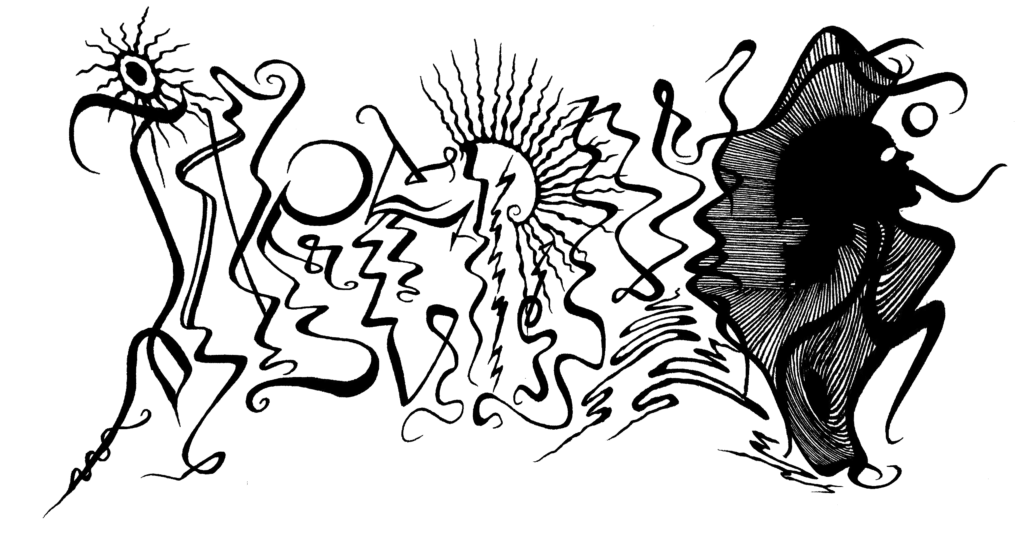
Inferno is a Czech Avant-Garde Black Metal band that has – over the course of more than 30 years – established itself as a prolific and unpredictable force within the modern Black Metal Circuit. Their journey is one that is told by the growth/evolution of their discography. What began as a rather conventional BM endeavor metamorphosed over time; eventually coming into its own magnificent form as one of the premier Avant-Garde BM collectives alongside Blut Aus Nord. Transcendent of any and all genre conventions yet wholly BM all the same. Pioneers of the formidable yet oft-overlooked Czech Black Metal scene, Inferno has been a prime example of class within a genre that prides itself on being abrasive. During my latest interview for This is Black Metal, Adramelech of Czech Black Metal progenitors, Inferno, provides a look into not only their music but also into music in general through the lens of formlessness and perpetual motion – never looking back. He shares his thoughts on BM recording: past and present, existence, spirituality, the Universe! And Inferno’s brilliant new “The Anthropic Sophisms (On the Heights of Despair)” LP, released on July 17, via Debemur Morti Productions.
This Is Black Metal: Hails! And welcome to This is Black Metal. Inferno began back in the Czech Republic during the tail-end of the Second Wave in 1995.
How would you describe the early Czech Scene and what inspired you to start Inferno?
Adramelech: The early Czech Black Metal scene was, above all, a time of enthusiasm, rebellion, and unwavering conviction. We were only around 14 to 16 years old, searching for our own path and expressing our ideals through music. At the same time, there were already outstanding bands such as Master’s Hammer, Root, Torr, Maniac Butcher, Dark Storm, and later Sezarbil and Silva Nigra, along with many others, who shaped the local scene and proved that authentic black metal could emerge from the Czech Republic.
Some of these bands are still active today and continue to create outstanding music. What united us most was the belief that Black Metal was something far deeper than just a musical genre; it embodied a free, untamed spirit without fixed boundaries. Although each of us was different and held our own views, we shared an unwavering devotion to this music and the motto against all. In the beginning, we had almost no experience or resources, and we learned everything as we went along. It was precisely this desire to create, push the boundaries of the genre, and express our inner world that became the driving force behind the band’s formation.
Inferno – Circulus Vitiosus Deus (The Infinity Ravages All) (Official video)
TIBM: Your discography is an expansive one and as I was going through some of it, I couldn’t help but notice a few Burzum covers.
What is it about Burzum/Varg Vikernes that continues to inspire you?
Adramelech: Actually, we’ve only recorded one Burzum cover, not several. When we were younger and first discovered the Norwegian Black Metal scene, along with all the controversy surrounding it, bands like Burzum, Mayhem, and Darkthrone had a huge impact on us. At that time, it was something completely new and inspiring, and it naturally influenced us as musicians.
If I remember correctly, the idea to record the cover came from our drummer. It was simply meant as a tribute to a band whose music had inspired us back then. It wasn’t about supporting Varg Vikernes‘ personal views or actions, but about acknowledging the undeniable influence his music had on the development of Black Metal.
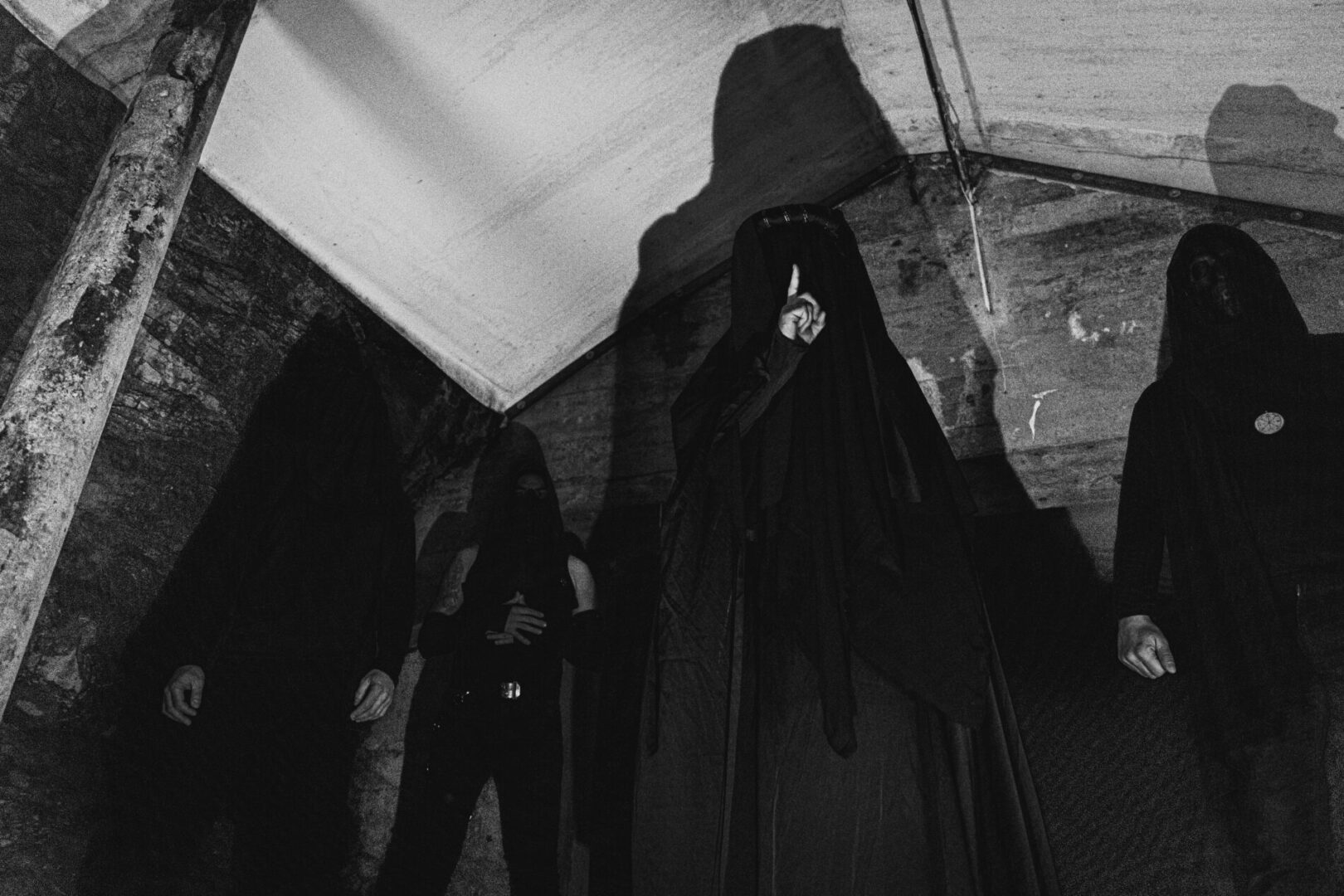
Inferno
TIBM: As an Artist who has obviously transcended typical Genre classifications, how do you feel about the idea that true Black Metal should always sound like “Transylvanian Hunger” and be recorded using second-rate equipment?
As you know, there are a lot of Enthusiasts, mainly older fellows, who feel this way.
Adramelech: I think this is one of the biggest myths that has surrounded Black Metal for decades. Of course, I understand where it comes from albums like Transylvanian Hunger established an aesthetic that became iconic. But to me, the essence of Black Metal has never been about poor production or recording on cheap equipment. The most important element has always been the atmosphere. If the music can draw the listener into its world and evoke feelings of darkness, coldness, mystery, or unease, then it has achieved its purpose. And there are many different ways to accomplish that. People often confuse lo-fi production with authenticity. In my opinion, high-quality production doesn’t automatically make music less genuine. Quite the opposite: a well-crafted mix can actually enhance the atmosphere when it’s approached with the right artistic vision. Countless bands sound deeply authentic, sinister, and emotionally powerful without relying on a deliberately lo-fi aesthetic.
Their recordings have depth, clarity, and space, yet they never lose their rawness or intensity. I think it’s a mistake to treat poor production as some kind of requirement for authenticity. Back in the early days, that sound was often the result of limited budgets, available technology, or simply the circumstances in which those albums were made. Over time, it became an aesthetic choice, but it was never a rule. Today, if you have the opportunity to create a record with great sound while preserving that dark, immersive, and unsettling atmosphere, I don’t see any reason to deliberately limit yourself. Black Metal should never be reduced to technical restrictions or nostalgic dogmas. For me, Black Metal is ultimately about vision, emotion, and atmosphere. Production is just another artistic tool. Whether an album is recorded on a four-track cassette recorder in a basement or in a world-class studio doesn’t matter as long as the music remains honest, compelling, and true to its own spirit.
Inferno – With Raving Mouths They Utter Things Mirthless, Unadorned and Unperfumed (official video)
TIBM: I would never say that there is anything typical about your catalogue, but up until a specific point, the release of 2013’s “Omniabsence Filled by His Greatness”, Inferno’s music felt a lot more familiar as far as themes and composition, whereas OFBHG is more transcendent in nature.
What caused the creative shift from familiar BM stylings, Occultism/anti-Christianity towards the more Avant-Garde, metaphysical/gnostic approach you take today?
Adramelech: I think the real turning point didn’t come with Omniabsence Filled by His Greatness, but much earlier, during the creation of Black Devotion. That was the first album entirely composed by our new member, Skagil, and his approach fundamentally changed the musical direction of the band. The compositions became more layered, less straightforward, and started to explore a very different sense of atmosphere and structure. From that point on, things naturally evolved along a different path. The lyrical transformation, however, wasn’t a consequence of the musical change itself. It was happening in parallel, driven by our own growing interest in metaphysical, Gnostic and other spiritual currents. The traditional Black Metal themes of occultism and anti-Christianity no longer felt sufficient as an end in themselves. We didn’t abandon them; rather, we began to see them as gateways to something deeper. Over time, we found a language that better reflected what genuinely occupied our minds and what we were experiencing internally. What was remarkable is that these two developments eventually converged.
The new music created a space that demanded a deeper form of expression, while our increasing immersion in those subjects naturally provided it. It wasn’t a calculated artistic decision or a deliberate reinvention, but two parallel processes that ultimately fit together almost perfectly. In general, we never felt the need to repeat ourselves or keep creating within the same established patterns. We’ve always had the urge to move away from things that no longer fully resonated with us and search for something driven by genuine inner necessity.
Once we allowed ourselves to leave familiar territory behind, inspiration started flowing much more freely. That desire for progression has always been part of Inferno, not only in music, but in the way we approach art and our own personal development. Every demo, EP and album was an essential step in shaping the way we create today, and I still value those earlier works for their authenticity and directness. But it was during Black Devotion that our desire to do things differently truly crystallized. The new line-up brought a different chemistry; the music became darker and more intricate, and at the same time our interests were leading us into increasingly profound territory. Omniabsence Filled by His Greatness wasn’t a sudden shift, but the natural culmination of a process that had begun several years earlier, when all these elements finally came together as one organic whole.
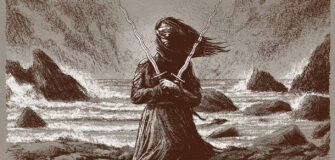
TIBM: You’ve just released a new album in “The Anthropic Sophisms (On the Heights of Despair)”, released on July 17 via Debemur Morti Productions. This thing is a real mind-fuck once you close your eyes, play it and allow it to work on you.
Can you explain the album’s concept and what sort of components – both inward and external – inspired its creation?
Adramelech: The title Anthropic Sophisms is based on the idea that throughout its existence, humanity has created countless concepts and frameworks that allow it to perceive itself as something exceptional. Whether through ideologies, religious systems, or philosophical theories, the same pattern often appears the belief that humanity stands at the center of everything, that it represents the peak of evolution, or that the universe somehow exists with the purpose of leading to human existence. The entire album can be seen as a reaction to this way of thinking. We are trying to challenge the anthropocentric view of reality and look at humanity from a much broader perspective. Not as the ultimate meaning of existence, but rather as a temporary and accidental outcome of vast processes unfolding throughout the cosmos, without any inherent higher plan or purpose.
One of the central themes of the album is also a kind of imagined trial of humanity itself. The human species is confronted with the question of why it constantly attempts to categorize reality, impose systems upon it, and reduce its complexity into structures that can be controlled, instead of accepting its ever-changing nature. A large part of human thinking, in our view, is driven by fear – fear of transformation, inevitable decay, death, chaos, and the realization that we never truly possess the level of control we often believe we have. Musically, we perceive this album as a rather natural continuation of Paradeigma.
However, this time we were much more deeply influenced by the discovery of certain principles of working with atmosphere and tension. We became increasingly interested in how recurring motifs, gradual layering, shifts in intensity, and different approaches to sound texture can create a powerful emotional experience, which we try to translate into our own musical language. With The Anthropic Sophisms, perhaps more than ever before, we approached each composition as an uninterrupted flow of energy. Not as a sequence of separate riffs or isolated sections, but as a process. Individual motifs were not important merely by themselves; what mattered was how they evolved, how they accumulated pressure, how their meaning gradually transformed, and how they slowly pulled the listener deeper into the internal world of the music.
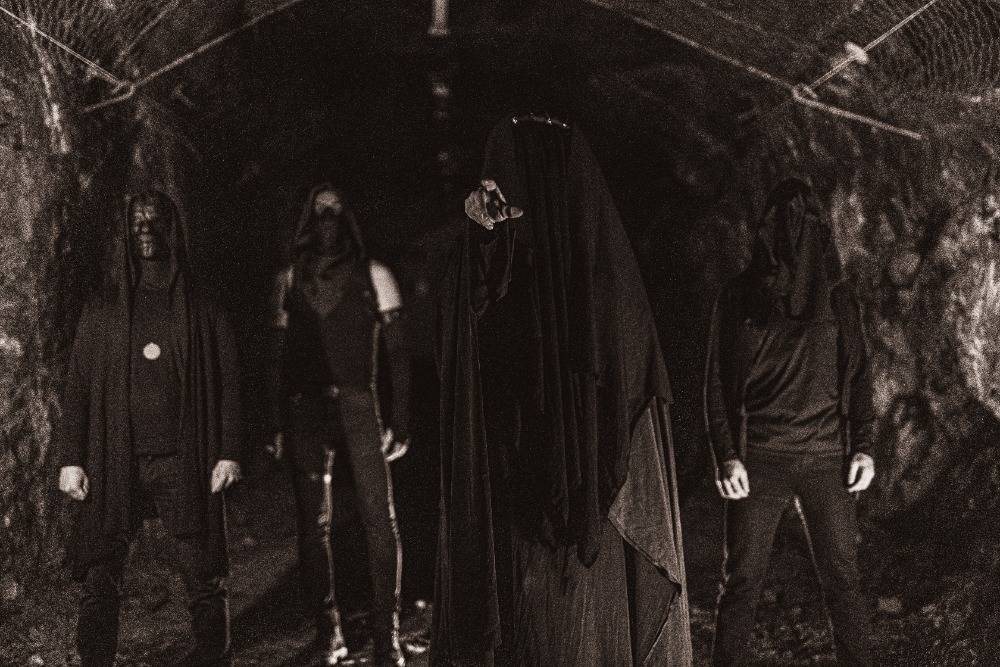
Inferno
TIBM: I would imagine that you utilized a number of unorthodox recording methods in order to create/capture such vivid moods throughout the length of the album.
What did you do differently with the new material that you hadn’t done previously?
Adramelech: Looking back, I don’t think there was any conscious decision this time to reinvent ourselves or deliberately sound different. Every album is really just a reflection of a particular period and of where you naturally end up after living through it. Black Metal is still our starting point, but over the years we’ve become much more interested in sound as a physical experience. We think less in terms of riffs or genre conventions and more about how a piece breathes, how it evolves, and how it gradually pulls the listener deeper into its world. With The Anthropic Sophisms (On the Heights of Despair), our main focus was continuity. We wanted each composition to feel less like a sequence of separate ideas and more like a single, organic current in which motifs subtly transform and accumulate over time. Individual parts were never the main point their relationships and the tension created between them were far more important. The sound itself also played a crucial role.
From the very beginning we knew exactly where we wanted to take the record, so during the mixing stage we deliberately pushed everything right to the edge. That slight sense of overload and constant pressure became an essential part of the album’s identity. Ironically, though, the songwriting process itself hasn’t really changed. We still begin with atmosphere, mood and an imagined sonic space rather than with riffs or technical ideas. The riffs come later, as a way of expressing that vision rather than defining it. I think that’s the real difference, not that we suddenly adopted a new approach, but that this time we came much closer to realizing the sound we had been hearing in our heads from the very beginning.
TIBM: I’ve interviewed several Occult Practitioners throughout my time as a Journalist: Satanists, Luciferians, Draconian Elite, Qliphotic Practitioners, etc.
How would you describe the Occult’s influence on Inferno’s music now when compared to your early works?
Adramelech: The fundamental difference is that, in the past, occultism served primarily as a source of inspiration, whereas today it provides the very framework from which our creative process naturally unfolds. It is no longer about employing symbols or concepts, but about lived experience shaping every aspect of the work. Our music is not an illustration of occult ideas; it is a natural consequence of them.
The evolution, therefore, does not lie in changing the subject matter, but in deepening our understanding of it. Over time, it also becomes clear that spirituality is not a collection of definitive answers or rigid dogmas, but an ongoing process of exploration, questioning, and transformation. It is not about reaching some final state of enlightenment, but about cultivating a deeper understanding of oneself and the world.
TIBM: A lot of Occult practices require the Practitioner – through the process of study and ritual – to strip away all illusion for Him to face His true self. I think the same can be said about the creation of true Black Metal.
What are some of the most valuable things you’ve learned about yourself and about spirituality in general through your years of Occult Practices and Black Metal artistry?
Adramelech: One of the most valuable lessons is the realization that genuine self-knowledge begins the moment we stop relying on illusions, comforting narratives, and socially accepted roles. Whether this process is approached through spirituality, art, or any other form of inner work, it ultimately comes down to the willingness to look at oneself without embellishment or self-deception.
Inferno
TIBM: Metaphysics is basically the use of abstract knowledge, thought and logic as a means to better understand existence. Sounds like a Rabbit hole in a way.
What’s the most profound piece of knowledge that the exploration of Metaphysics has revealed to you?
Adramelech: The deepest insight that the exploration of metaphysics can bring is perhaps the realization that reality is far more mysterious than it usually appears to us. The more one tries to reach the very foundations of existence, the more one encounters layers of complexity, uncertainty, and questions that have no simple answers.Metaphysics is not only a search for truth, but also an acceptance of the fact that human understanding has its limits. It teaches us that wisdom does not lie solely in the ability to find answers, but also in the courage to continuously question and explore the very nature of being itself.
TIBM: Do you gain much satisfaction out of Inferno, or would you describe it as something that is perpetually evolving?
Adramelech: After thirty years, I see it as something that has become inseparably connected to our lives. It is a part of our identity, but at the same time, we realize that nothing lasts forever and that everything naturally evolves. Every change we have gone through has been important to us; it has helped us better understand what we want to express as a band, what direction we want to take, and ultimately who we want to be.
TIBM: Do you have a message for your followers?
Adramelech: If I could wish for just one thing, it would be that people give our new album the space it truly deserves. That they don’t approach it with the expectation that it has to continue something we have already said, or with the feeling that it is simply another entry in the endless stream of new music passing through our lives every day.
I would hope that, for a moment, they could let go of the need to search for connections, compare, measure, and immediately decide where it belongs.
Just sit with it. Listen without rushing. Allow it to reveal itself gradually, at its own pace. Let it open its own world and follow the path it chooses to take.
TIBM: Thanks for your time!
You Might also Like