Interview: Draconis Infernum

Share
Interview by Transmontanus
Some bands drift through the decades like passing storms — violent for a moment, then dissolved into memory — and some move with a more deliberate gravity, as though each release were carved into time rather than merely issued into it. Since their emergence in 2005 from the shadowed margins of Singapore’s extreme metal underground, Draconis Infernum have embodied the latter condition: a project less concerned with visibility than with endurance, less seduced by novelty than by the slow, disciplined cultivation of an uncompromising inner fire.
In a geographical landscape rarely mythologised within Black Metal’s canonical cartography, their persistence has taken on the quality of defiance. Isolation, rather than diminishing their voice, appears to have distilled it, sharpening a sound forged in doctrinal intensity and shaped by a refusal to concede to the softening pressures of time, trend, or technological convenience. Across two decades, their trajectory has been marked not by dramatic rupture but by an austere evolution: each recording a deeper excavation of the same ideological terrain, each album another flare in a constellation of controlled extremity.
Their latest full-length, “The Black Flames of Satan”, stands as both culmination and provocation, a work that seems to burn with a colder, more calculated intensity than the youthful hostilities of their earliest manifestations. Where once raw abrasion functioned as the primary language of confrontation, there is now an expanded palette of atmosphere, structure, and psychological tension. Yet beneath this refinement lies the same furnace: a commitment to Black Metal not merely as sound, but as an existential stance.
To engage with Draconis Infernum is therefore to enter a dialogue not only about music, but about continuity, conviction, and the fragile balance between ritualised orthodoxy and the necessity of transformation. Rather than rehearsing familiar narratives of genre allegiance or underground authenticity, we sought to explore the deeper mechanics of their creative engine, the philosophical undercurrents, emotional temperatures, and structural decisions that sustain a band whose longevity itself has become a form of resistance.
What follows is not a casual exchange, but a passage through fire and doctrine: a conversation with artists who have chosen persistence over visibility, intensity over accessibility, and whose legacy, whether as traditionalists, innovators, or something more elusive, continues to smoulder at the periphery of the global underground.
This Is Black Metal: Hails! And welcome to This is Black Metal. For those who may be encountering the band for the first time, could you tell us how the project originally came into existence and what inspired its formation?
Xepher: Hails, and thank you for having me. I formed Draconis Infernum as the songwriter with the intention of crafting Black Metal that could embody the cold vastness and inner descent that has always represented me. The inspiration came from the Second Wave of Black Metal bands, along with a desire to create something of my own. Draconis Infernum is inspired not only by traditional old-school elements but by isolation, defiance, and transcendence.
Draconis Infernum took shape gradually, evolving from raw ideas into a more defined identity. What began as scattered riffs and concepts became a cohesive vision rooted in themes of cosmic insignificance and inner turmoil. Draconis Infernum exists as a vessel for expression, unfiltered and shaped by personal experience, as well as the timeless spirit of Black Metal itself.
TIBM: Looking back at the early days of the band, what were the main musical or ideological influences that shaped your sound and vision?
Xepher: In the early days, the foundation was built on a deep immersion in the Second Wave of Black Metal, bands like Bathory, the old Mayhem and Venom. Bands from that era carried a sense of purpose and conviction that went beyond sound; it was about atmosphere, energy and identity. Draconis Infernum was driven by themes of individualism, detachment, and anti-religious conviction. It was never about following trends or fitting into a mold, but rather about forging something of our own, pushing the boundaries and proving the naysayers wrong.
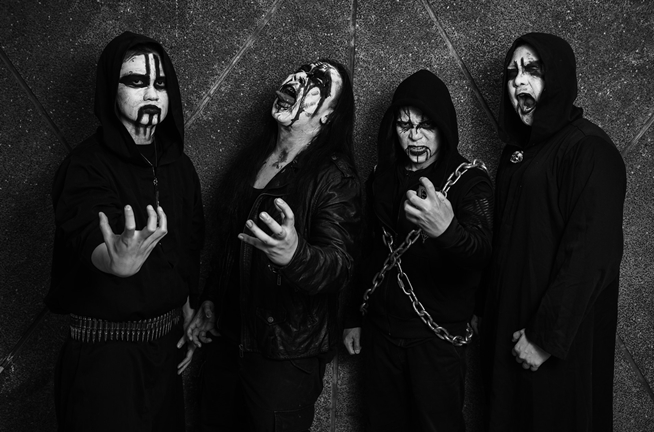
Draconis Infernum
TIBM: Musically speaking, how did the songwriting process unfold for this album? Was it a spontaneous creation or something that developed slowly over time?
Xepher: The songwriting process for this album unfolded gradually over several years following our previous release. We never felt any pressure to rush new material simply to meet a deadline, as it has always been important for us to let the music develop naturally.
Typically, the process begins with Demo Tracks being exchanged back and forth between the drummer, who is based in Indonesia and myself. We refine these ideas continuously until we are fully satisfied, and only then do we move into the studio to record.
As with many bands, each of us balances personal lives and day jobs, and Draconis Infernum has always existed alongside those realities. In fact, some of the ideas for this album began forming even as far as ten years ago, before evolving slowly over time into the final compositions.
TIBM: Many albums in Extreme Metal attempt to project darkness outward. While creating “The Black Flames of Satan”, did you ever encounter moments where the themes of the record began to confront something personal within yourselves?
Xepher: When I was writing “The Black Flames of Satan,” the themes were never just abstract or theatrical to me. They were rooted in real experiences of inner conflict and estrangement from the world. As the songs took shape, certain lyrics and atmospheres inevitably began to mirror things I had experienced personally, even if they were expressed more symbolically or subtly.
Rather than being tied to one incident, it was about recognizing that the aggression and rejection throughout the record are simply reflections of my own perspective and the battles I carry within. So yes, in that sense, the album did confront something within me, but it did so in a way that felt empowering rather than being destructive.
TIBM: Was there a particular track on the album that proved especially challenging or meaningful during the recording process?
Xepher: There are a few, but if I had to choose one, the most meaningful track for me would be the title track, “The Black Flames of Satan.” It represented triumph over a long series of obstacles surrounding the album and the band. The process of bringing that song to completion felt like a decisive breakthrough, both creatively and personally.
In that sense, it serves as a reminder that despite delays, setbacks, and interference from the outside world, the will behind Draconis Infernum remains intact and unbroken.
TIBM: The atmosphere of the record feels very intense and immersive. How important is atmosphere when you compose music?
Xepher: Atmosphere is central to how I write songs. The genre loses its meaning if it is only about speed or meaningless aggression without a strong sense of feeling and space. It always comes back to that one main riff that carries everything.
Draconis Infernum is about crafting that riff, not simply chasing speed or relentless aggression. The riffs, melodies, and structures serve a specific mood, whether it is cold, oppressive, triumphant, or introspective. For me, atmosphere is what separates an average track from one that lingers in the mind long after.
TIBM: During the recording of this album, was there a moment where a particular song or passage surprised even you, something that felt as if it emerged from instinct rather than deliberate composition?
Xepher: There were moments like that, not only on this particular recording but across other Draconis Infernum releases as well. Sometimes something unplanned emerges simply through experimentation and ends up becoming a crucial part of the song.
A good example would be “Emissaries of Hell.” I was not satisfied with the early Demo versions, but in the studio, new ideas appeared while I was playing around, and they completely changed the character of the track. Those instinctive moments are often the ones that remain and ultimately define the final version, which turned out for the better.
TIBM: Black metal often walks a line between tradition and evolution. Where do you see your music positioned within that spectrum?
Xepher: Draconis Infernum exists directly between those two poles. We are firmly rooted in the tradition of Black Metal and never lose sight of what defined the genre in the first place, even when we choose to deviate from it. For us, evolution does not mean abandoning the foundations but twisting and refining them in our own way.
TIBM: If someone were to listen to “The Black Flames of Satan” decades from now, long removed from the present underground scene, what aspect of the record do you hope will still feel alive and relevant?
Xepher: I’ve never really thought about how this record will be received decades from now. We have always written music for our own satisfaction first and foremost, not to meet expectations or cater to anyone. If “The Black Flames of Satan” still feels alive to someone years from now, it won’t be because it followed any trends, but because the conviction behind it was genuine.
TIBM: How do you see the band evolving from this point forward? Are there new directions you would like to explore?
Xepher: I never feel the need to map out a clear “evolution” for Draconis Infernum. Draconis Infernum has always moved according to what feels relevant and necessary to us in a given moment, not according to a long-term plan or external expectations. We have always walked our own path. If there are new directions to explore, they will reveal themselves naturally through the writing process, as they always have over the years.
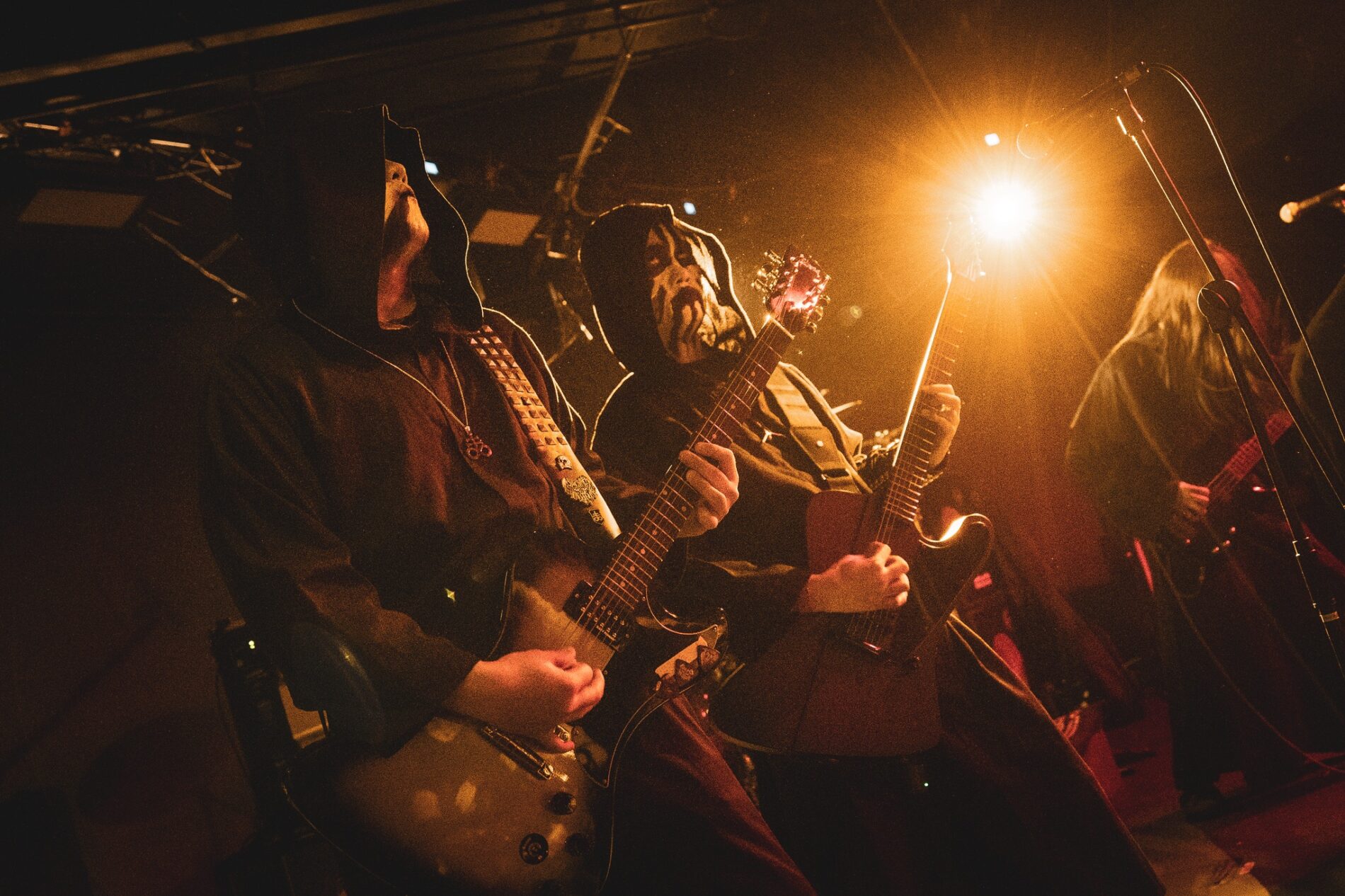
Draconis Infernum
TIBM: Finally, what message or experience would you like listeners to take away after immersing themselves in “The Black Flames of Satan”?
Xepher: Immerse yourself in it and let it affect you however it will. I neither ask for understanding nor approval. The album exists for those who resonate with it.
Thanks for your time!
You Might also Like