Review: Servant – Lux Ex Inferis

Share
Review by Justin Joseph
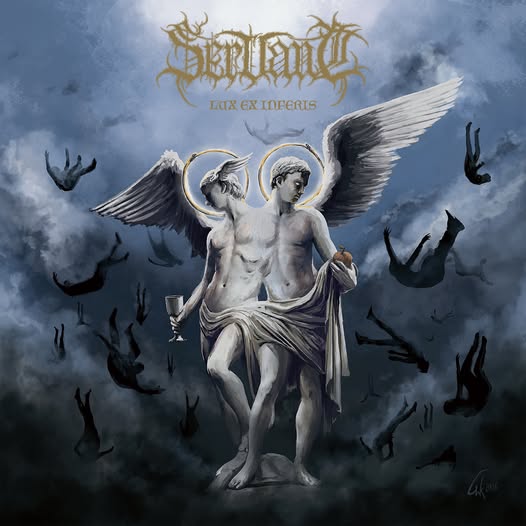
Servant – Lux Ex Inferis
Record Label: AOP Records
Year: 2026
Rating: 10/10
A desolate soul may feel the urge to retreat, to abscond into the crevices of its own mind, a veil behind a veil, for when its own being is shunned, cast out as a pariah, its veins may seek to be reclaimed by stone. Its heart? A beating shell. But what does it truly yearn for? What is it that it desires? Perhaps it is but to embark upon a journey where the absence of “I” is answered, to seek shelter no more, but instead to transcend beyond the never-ending spiral and, if only once, to truly find a sliver of understanding, to look upon the truth no matter the shape it may take.
“Lux Ex Inferis” by Servant becomes a beacon, guiding the senses to a light that illuminates what is hidden within, liberating in its aura. Once found, the mind will realize that the light is meant to be ascended, for in its golden splendor, its branches and its roots wish to become one with the consciousness. Radiating in the same flame of Melodic Black Metal, with a resonance similar to bands such as Watain, Groza, and Outlaw, and even carrying the energy of Dødheimsgard’s “Black Medium Current” where the guitars are concerned, Servant creates an album where sound and meaning intertwine, each becoming a path through which the other may be uncovered.
Throughout one’s journey, a soul may brave the elements, be it the storm that rages within or the very rock to be ascended that turns supple hands into callused flesh. Whether it be inward or outward, a hurdle is discovered. Throughout this voyage to reach the unattainable, the soul may meander, may fall, and even amidst turbulence, some peace may be gleaned. The search itself, when broken down to its essence and transmuted into sound, exhales through the guitars, which map the soul’s pilgrimage through every ascent and descent.
Resonating in a sharp, slick tone, the guitars carve out the foundation for the melodic elements to flow into. However, it is because of this tone that much of the emotive expression comes forth, sometimes in a sombre moment and often erupting into a crescendo. The production also lends a sense of clarity to the guitars’ riffing, where each riff, each note, arrives in a gleaming, polished demeanor. This may come across as a negative on other albums, where a polished sound prunes the spirit of the music. However, Servant uses this pristine sound to instead highlight the many layers of the guitars’ movements, from the rhythmic riffing to the slow and peaceful strumming, where, at times, it feels as though you can hear the plucking of the strings.
“Tabula Rasa” is a track that embodies the aforementioned, where the guitars exhibit a melodic cadence through different movements, from their meandering motion to a steeper incline, where the riffs climb towards the climax, then dive deeply while maintaining their rhythmic temperament, often branching into a more pensive demeanor. The shifting amongst a myriad of movements, though displaying an aptitude in the virtuosity of the guitar playing, I believe, is but a morsel of the sound. Its true nature takes these intricacies, together with the tone and production, to create a harmonic dissonance that entrances the senses, almost feeling transcendent in its spirit, as exhibited on “The Accuser.”This becomes the crux of the strings, where each note feels as though it radiates against the skin, its rays perceptible upon the body.
When the soul finds what it yearns for, when the search ceases, and that which stands before it becomes ineffable to comprehend, a sudden surge can be triggered, where exultation intertwines with ecstasy and triumph, all felt as one sudden rush of energy. For as you gaze upon this wonder, the eyes become bone-white, as what is observed cannot be contained through mere sight, and what is felt cannot be bound by flesh. This sensation becomes the translation of these emotions into sound through the percussive elements.
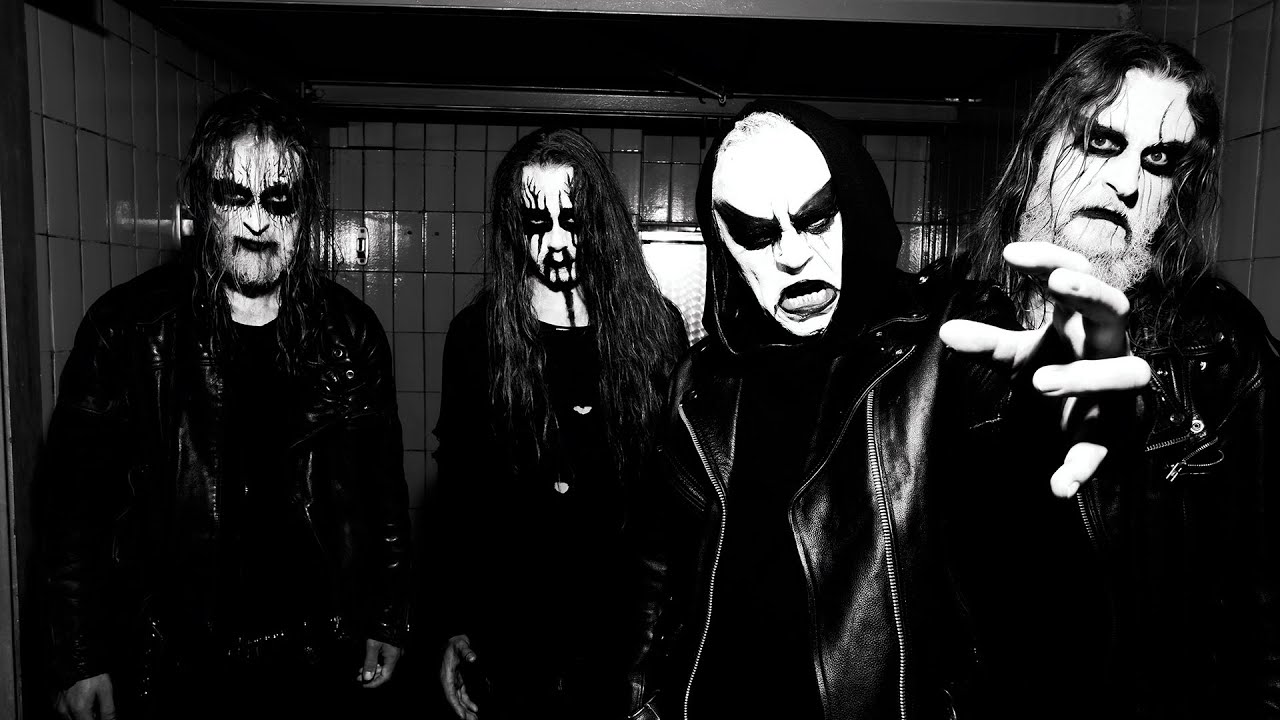
Servant
There exists a juxtaposition within the drumming, for even though the motion is pummeling and, at times, a barrage in sound, it is also graceful yet calming. This is exhibited through the track “Glorification,” where its precision comes forth in the double kicks, embodying a stern yet fluttering sound when combined with the synths. The double kicks are often used, but in a meticulous manner, as though they are contouring the shape of the album, adding depth to the spaces where the elements breathe, especially in the more tranquil moments, where the drumming becomes more expressive as it builds towards its climax.
The percussion becomes the equilibrium of the album, the very scale upon which balance is introduced, for its contrasting elements never outweigh each other, each one highlighting the other and, by extension, magnifying the turbulent and more tranquil cadences. In my opinion, “Thanatos, Embrace of the Night” becomes the quintessential track that showcases the drumming in both its ability to craft its own melody, akin to the guitars’ flow, and its ability to use these same elements to coexist seamlessly with the other musical constructs. Through the use of double kicks at a steady tempo alongside the vocals and guitars, the drums create their own branch, which bestows a swagger upon the album, accentuated by groove-laden beats that interject themselves into the riffs while also adding cohesion between these energies. The drumming, by itself, becomes its own body, pulsating on a different wavelength, yet still working in unison with the synths and strings.
There are often ideas that wither away before they are ever given the chance to take root, the seed never touching fertile soil. But then there are those where the very seed, potent in its energy, emerges from its shell and takes root, transforming into something grandiose whose branches cast their shade in awe and splendor. The ambient keys, by extension, become the aura that rises from this soil, spreading their sensations as they cascade throughout the album.
The ambient elements upon the album can be summed up within the track “In Noctem,” which also holds the very essence of the album as it unfolds; for this one track, though minuscule, contains beauty in an ethereal shade, where the keys weave a melody that transcends and takes form within the other tracks. Be it in a shape that resembles it or within the core of their sound, the track invites the senses to ascend the tree that sprouts forth.
Usually, synths and keys are used to accentuate the atmosphere of art, where they often appear in a submissive role. However, Servant uses these elements in a dominant role, matching the energy of the guitars and drums. Tonally, the ambient elements undertake different movements, shifting from a shimmering dissonance to a more chiming sound, with some acoustic portions also included.
“Glorification” is a track that exemplifies this, where the inclusion of the keys in their gliding movement breaks up the emotive resonance of the drums and guitars, allowing each instrument the luxury to breathe, but also allowing the shade of the atmosphere to rotate, where what was once umbral is now penumbra. “Of Stones, Sleep and Death” is a track that represents the shifting tones of the synth, in turn transforming the atmosphere for that abrupt moment, where the synths exhibit an aquatic, airy resonance, indenting the atmosphere but not yet puncturing it.
Communion betwixt the mind and that which is created becomes sacramental to oneself, for the dialogue spun from the loom of branches and roots embeds itself into the soul, imparting that which is sought and that which was never fathomed to be sought. Even the soul that is slow of speech and tongue need not move its lips to delineate what was learnt. The transmission inherited by the consciousness finds expression through the vocals, where the confines of human emotion become blurred, and a voice that roars need not translate into anger or aggression. Instead, it becomes a voice whose might remains unhindered.
Depicted in a prophetic cadence, where the voice exhibits a powerful timbre, the vocals feel as though they are imparting wisdom unto a congregation. Though their register may sound “harsh,” it never translates into mere human emotions such as rage or anger. Rather, the energy that emerges feels as though it were a revelation made into speech. A raging river that cuts its own course along the bank may seem harsh in its power to another, yet it is but its natural state. It seeks naught to harm nor to protect, to give nor to take. So too do the vocals resonate throughout the album.
“Hypnos I See You” is a testament to the ambience crafted through the vocals, where the production cloaks the voice in a sharp aesthetic, therein exposing its force like a nerve rendered naked. A caustic and coarse timbre permeates the vocal patterns, where it feels as though the diaphragm is being exhausted by the immense energy that wishes to be expelled and take form. But exhausted does not mean in a negative light. Rather, it becomes a merit, as demonstrated, for instance, on the track “Lux Fulget,” which, in turn, showcases another layer of rawness found through the pristine production. Here, that visceral nature appears more potent yet also urgent, as though every word enunciated wishes to be free, wishes to be consumed, and wishes to live in the mind of another.
Servant’s album prior to this, “Death Devil Magick,” felt like a ritualistic experience that stretched outwards to commune with an ancient deity. “Lux Ex Inferis,” however, carries the same ichor through its arteries, yet its body has evolved in sound, for its very melodies and spirit feel introspective, where the deity to be worshipped comes from within, and it is from within that the universe expands itself like a chord that swells through its timbre. The ceremony remains, yet the message becomes more profound in speech and lyrics. The very art itself bleeds beyond its borders, and this becomes the beauty of this work, for Servant has managed to connect with the soul on both a human and a rather archaic level, leaving the mind to ponder more. Yet it is truly an experience to become lost in this weave of questions, where one dives deeper into its spiralling architecture.
The essence of Servant transfigures itself into the forbidden fruit, one whose core is teeming with knowledge incomprehensible to the mind, yet alluring in its beauty and discovery. But let not the soul be satiated through a mere bite, indulging in its delectation. Rather, let it be bound to the trunk, where the torso and limbs are lashed against it with rope. Let hunger grip and twist the stomach and emaciate the mind, for it is through decomposition that the spirit is infused with the art, where limbs contort into roots and branches, both reaching the highest and lowest depths. Yet it is within these depths that tranquility is unearthed.
You Might also Like